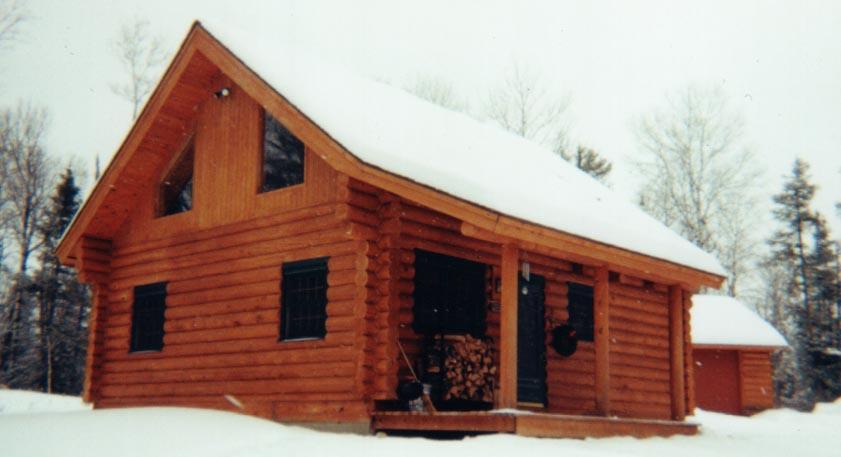
The work to select a good builder for the log cabin is complete and the builder has been selected. A written contract has been signed. Now what should be done to keep the owner in control of the building process? I learned, of course, communication is the key.
The contract should include the contractor's time schedule to complete the log cabin. Of course, the contract should include a list of exceptions which may delay the contractor's schedule and over which the contractor has no control, such as acts of God or delays by suppliers or sub-contractors.
The owner should keep an on-going written diary of the progress of the construction of the cabin. All communications with the contractor should be recorded. Using e-mail may be one method of communication, but use a hard copy of the major decisions to the contractor.
Inspections of the construction process by the owner is extremely important. Ask for a schedule from the contractor about the various components of the construction, such as the foundation work, the first floor framing, the log assembly, and the roof construction. You get what you inspect. Ask a lot of questions!
During the contruction process think and decide about the various fixtures in the cabin. What would you like for the kitchen cabinets, vanity cabinet, toilets, bathtubs, showers, stove, lighting, etc.? Balance your desires with your budget.
Showing posts with label general contractor. Show all posts
Showing posts with label general contractor. Show all posts
Thursday, August 16, 2007

Wednesday, July 18, 2007
The Builder
The most important decision you make in building your new log home or cabin is choosing a good general contractor (builder) who is knowledgeable of building log homes or cabins.
Of course, the builder should have good references from past and current customers. The potential customer should inspect a number of homes or cabins that the builder has recently built. A careful inspection should include:
1. Log work tightness
2. Trim work alignment and tightness
3. Cracks in foundation walls, interior partitions, and interior finishes
4. Rain water infiltration
5. Levelness of floors and ridge lines
6. Check detailing of doors, windows, stairs and interior cabinet work
A good builder makes a project go smoothly as he or she knows the sub-contractors, and how to order materials and their delivery. The builder also knows permits required, driveway construction, sewers, water, electric power, the various costs, and the quality of the various materials. The builder can be a great help with the various details and decisions an owner must make on the project.
Communication is key. The owner must explain to the builder exactly what they want and at what cost. Therefore, an early estimate of the cost is very important.
Next, pre-qualify yourself for the total amount of the money you can afford to borrow. An old rule of thumb may be that 28% of your gross income should go for all long-term debt. Don't forget the down payment required. Also, shop for the lending institution like you shopped for the builder.
I like to obtain a set of drawings of the proposed house or cabin with specifications. One can then obtain bids from the good builders you have selected. It gives you more control of the bidding process.
Of course, the builder should have good references from past and current customers. The potential customer should inspect a number of homes or cabins that the builder has recently built. A careful inspection should include:
1. Log work tightness
2. Trim work alignment and tightness
3. Cracks in foundation walls, interior partitions, and interior finishes
4. Rain water infiltration
5. Levelness of floors and ridge lines
6. Check detailing of doors, windows, stairs and interior cabinet work
A good builder makes a project go smoothly as he or she knows the sub-contractors, and how to order materials and their delivery. The builder also knows permits required, driveway construction, sewers, water, electric power, the various costs, and the quality of the various materials. The builder can be a great help with the various details and decisions an owner must make on the project.
Communication is key. The owner must explain to the builder exactly what they want and at what cost. Therefore, an early estimate of the cost is very important.
Next, pre-qualify yourself for the total amount of the money you can afford to borrow. An old rule of thumb may be that 28% of your gross income should go for all long-term debt. Don't forget the down payment required. Also, shop for the lending institution like you shopped for the builder.
I like to obtain a set of drawings of the proposed house or cabin with specifications. One can then obtain bids from the good builders you have selected. It gives you more control of the bidding process.
Subscribe to:
Posts (Atom)